%4010x.png)
Goal:
Chunky Chameleons began with a problem we didn’t know how to solve. Our only starting point was an animal and a constraint: design a fully mechanical, interactive game for fourth graders inspired by chameleon behavior. No electronics, no screens, and no clear idea of what the game should be.
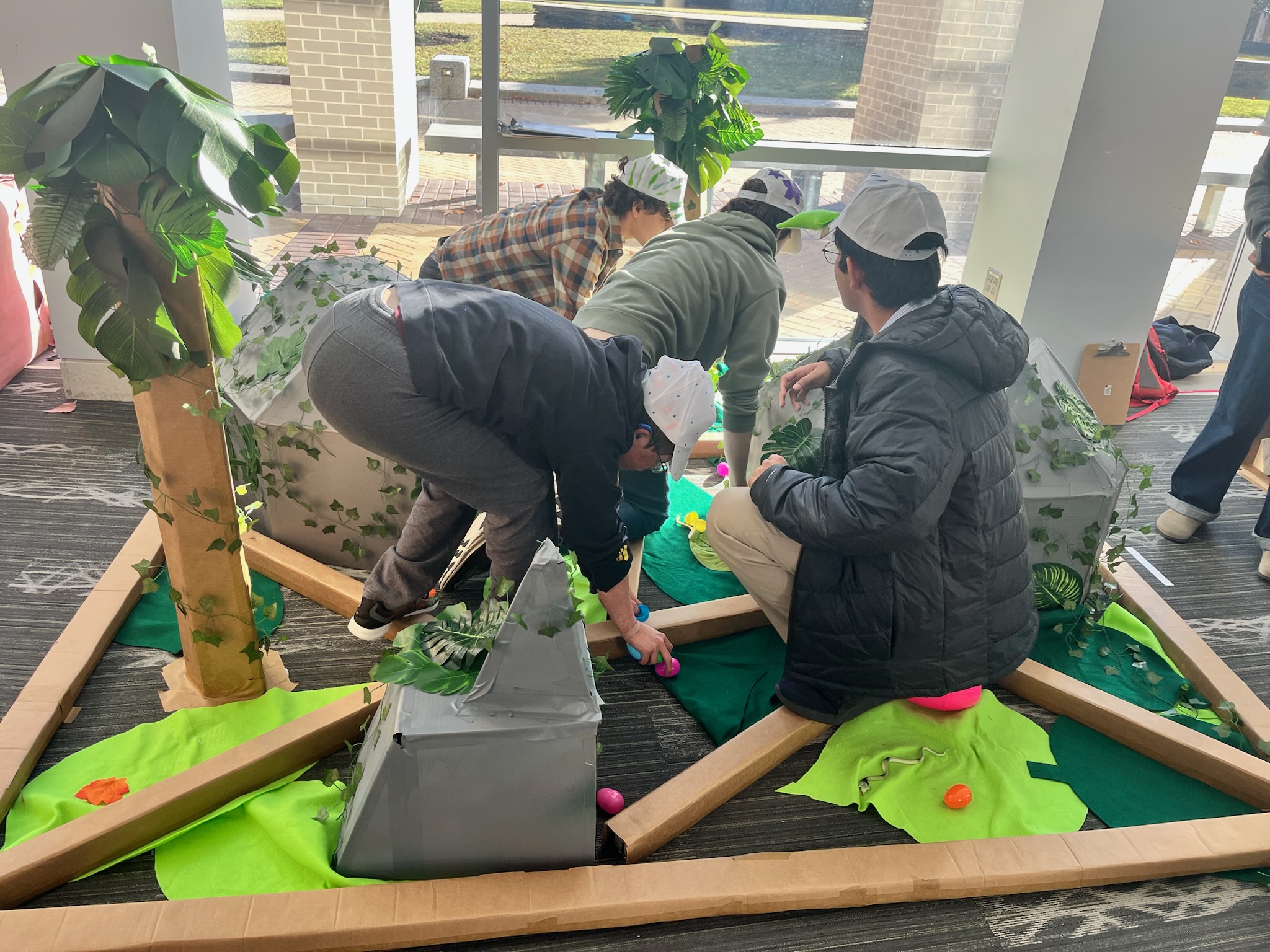
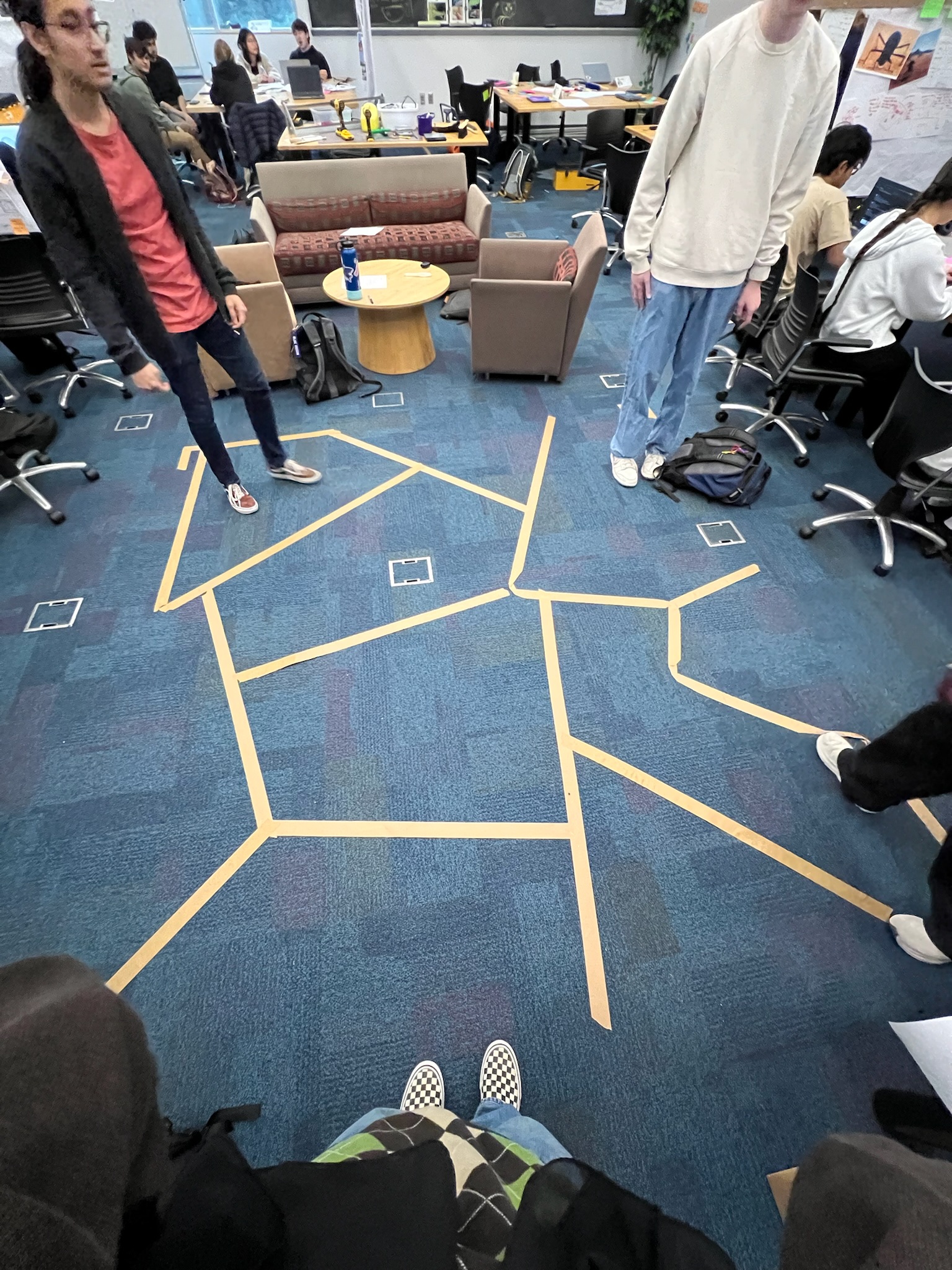
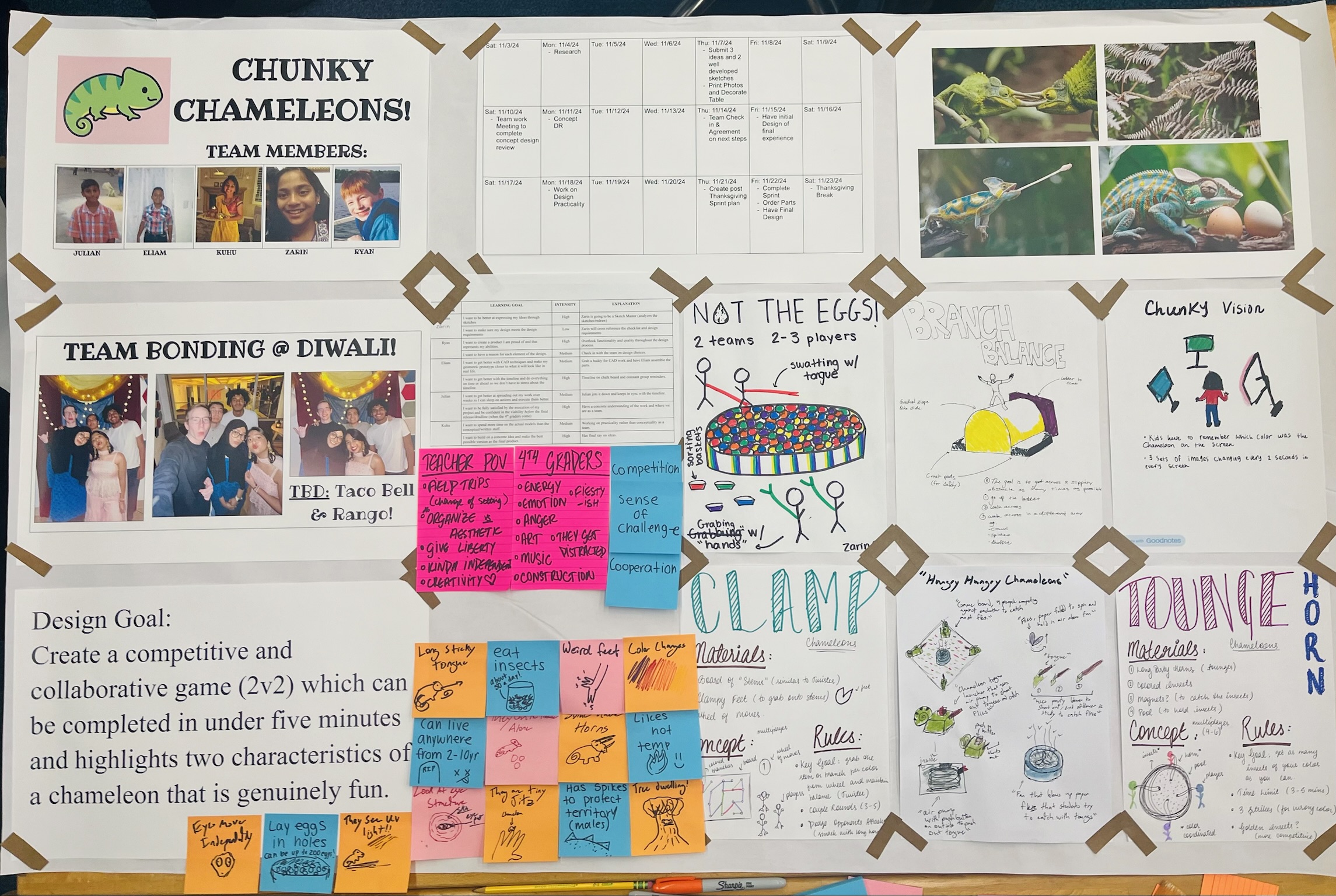
Instead of copying obvious traits like color change, we focused on how chameleons move and compete in their environment. That led us toward balance, territorial conflict, and careful navigation. Our goal became creating a short, replayable team game where kids physically act like chameleons, crossing narrow branches and competing to collect eggs.
Challenges:
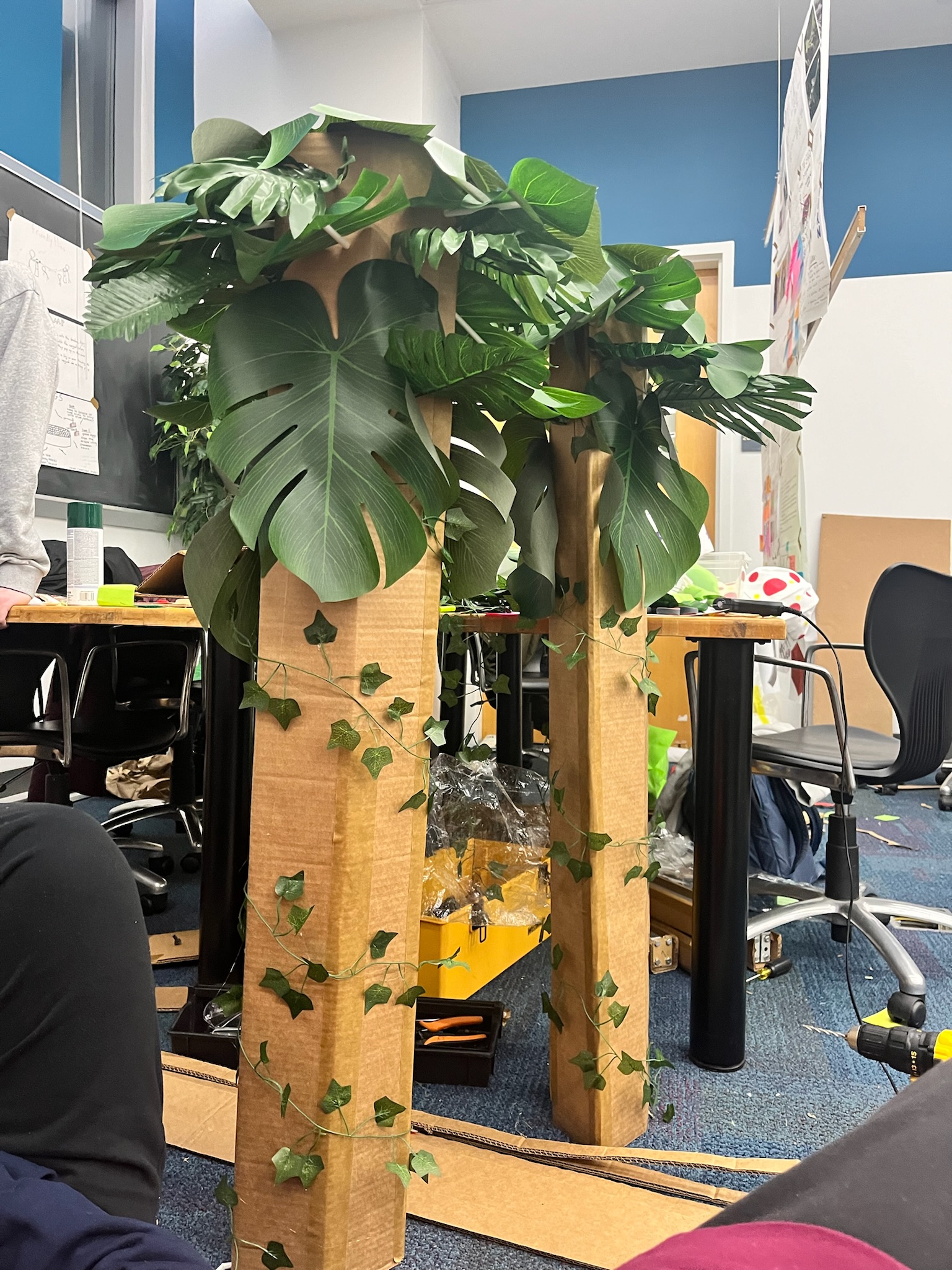
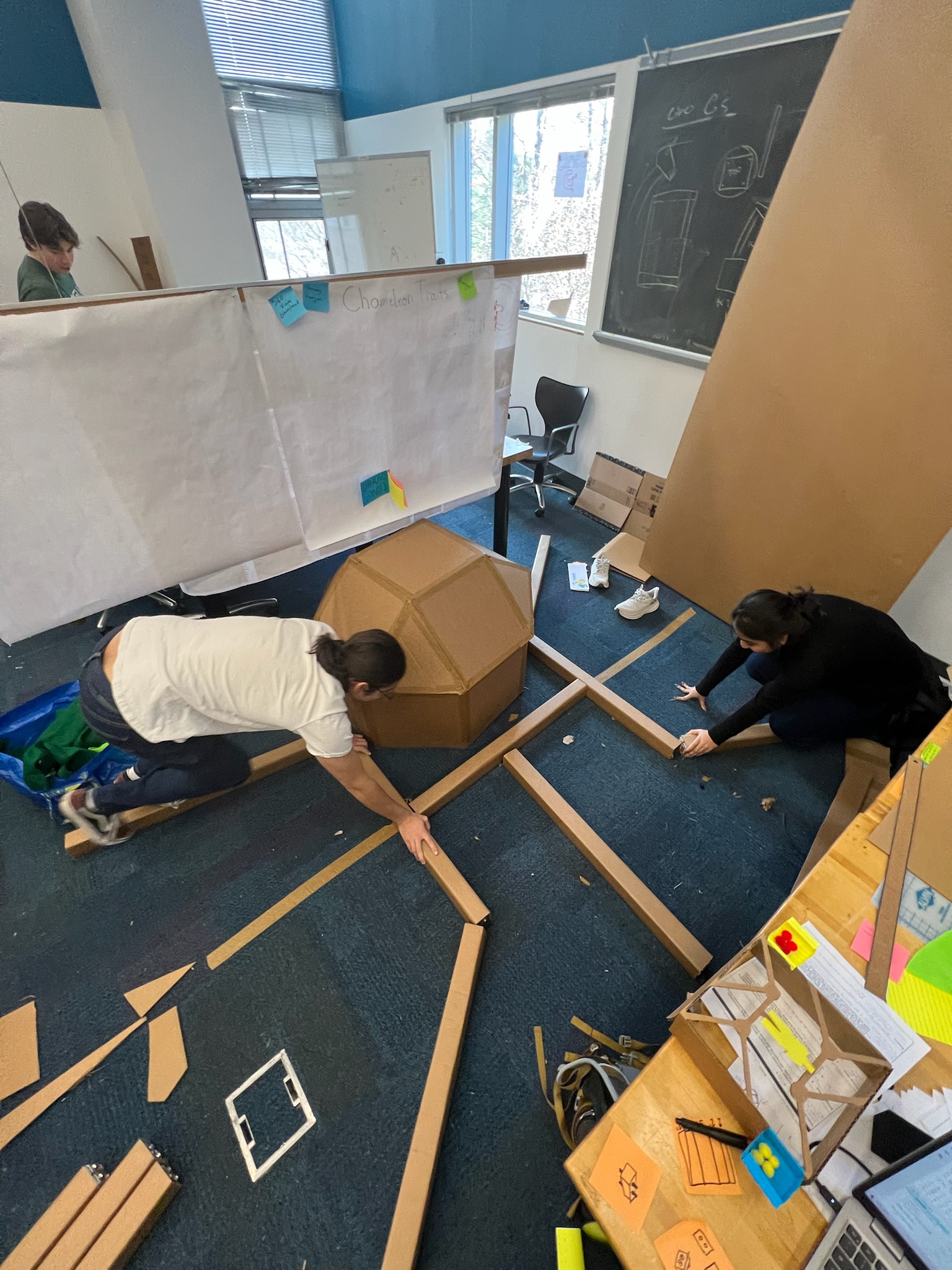
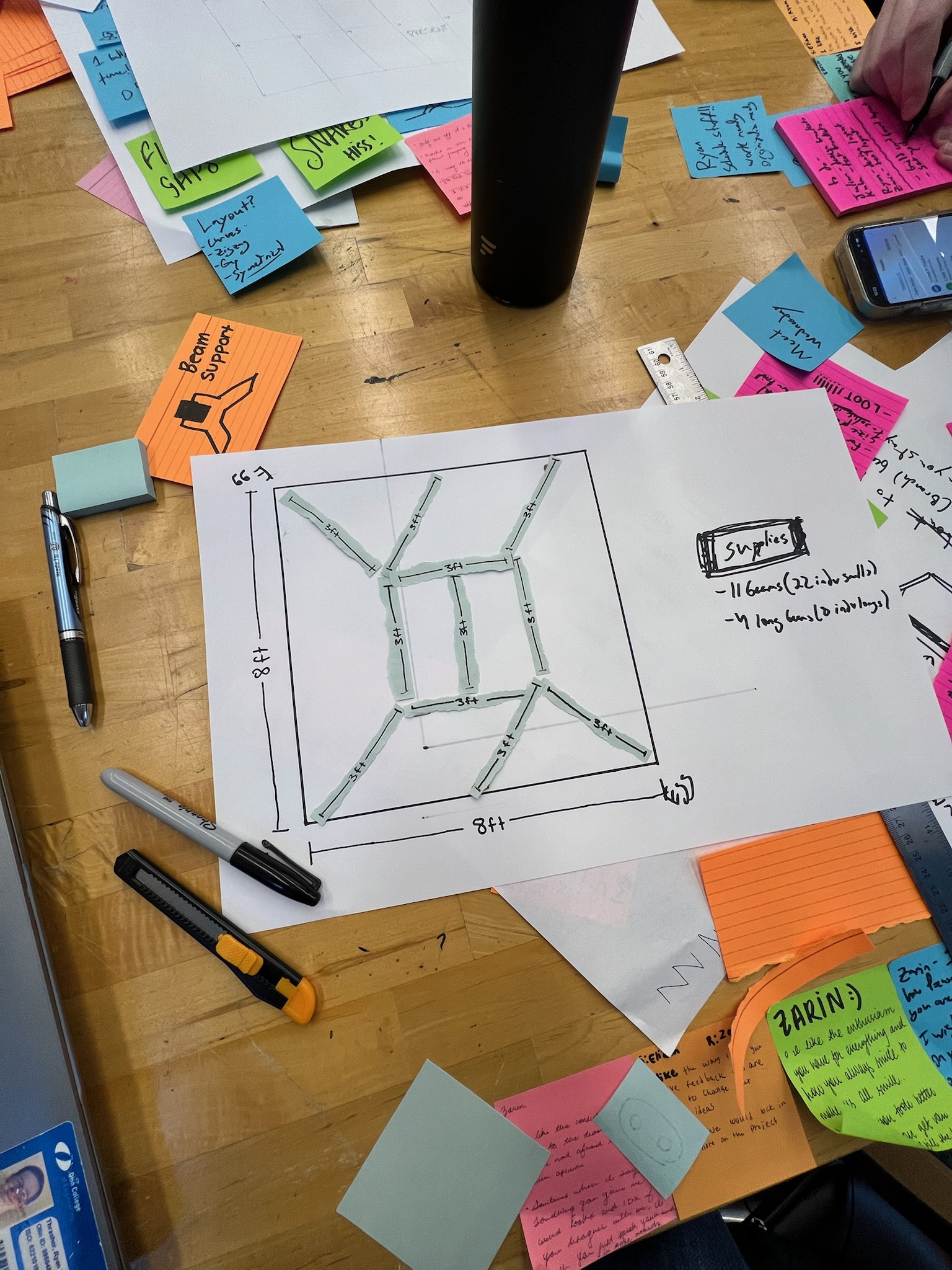
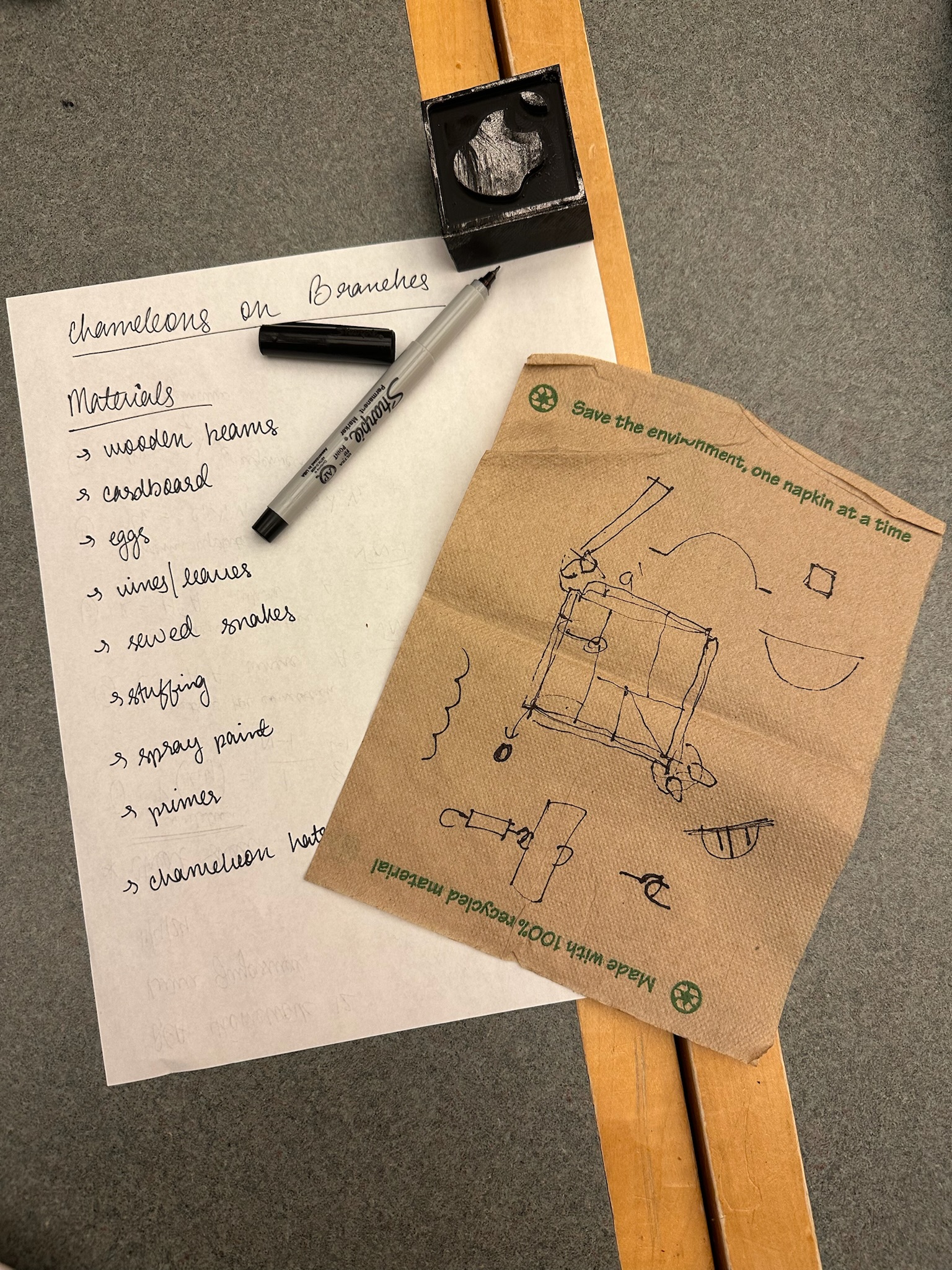
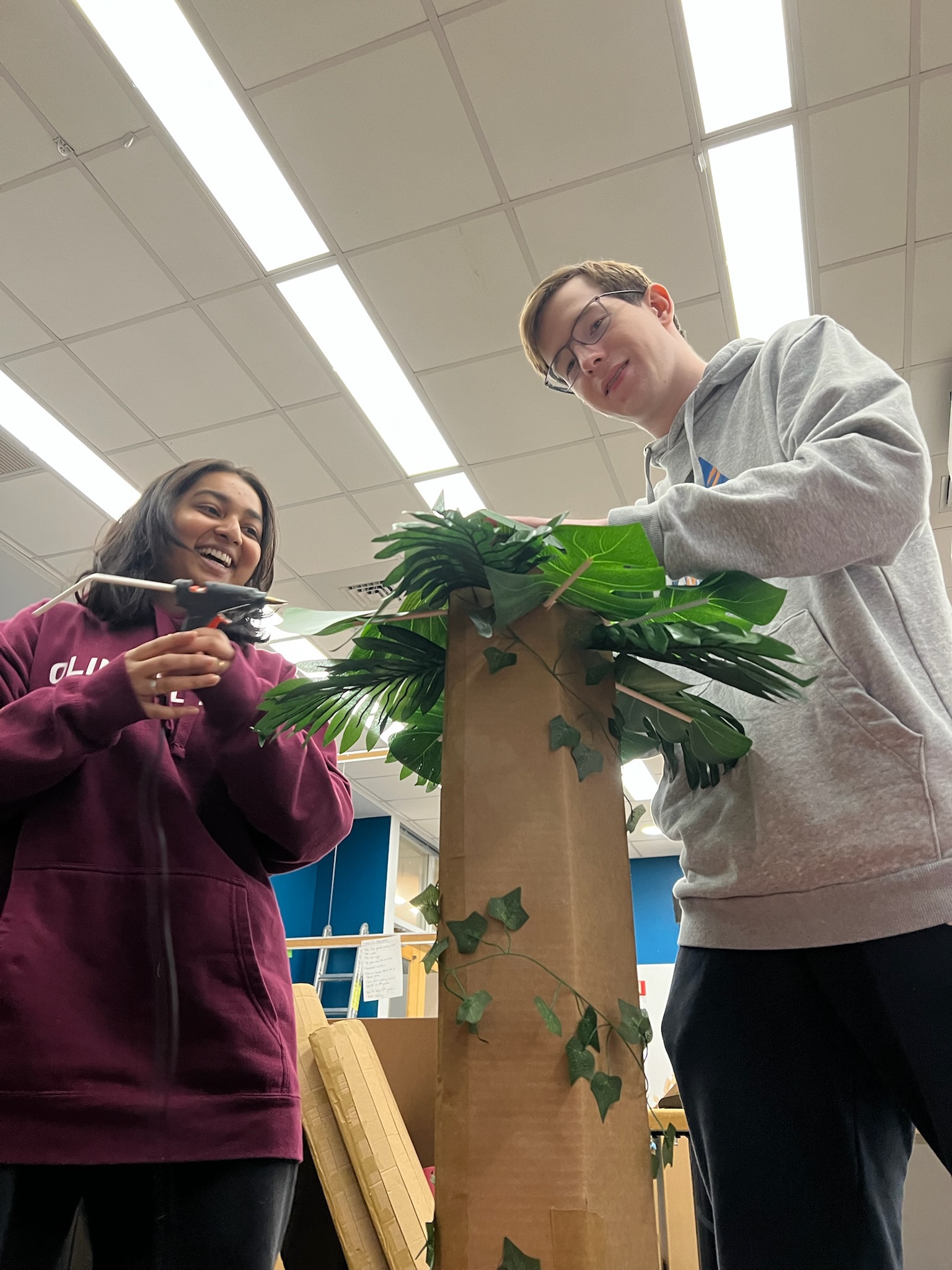
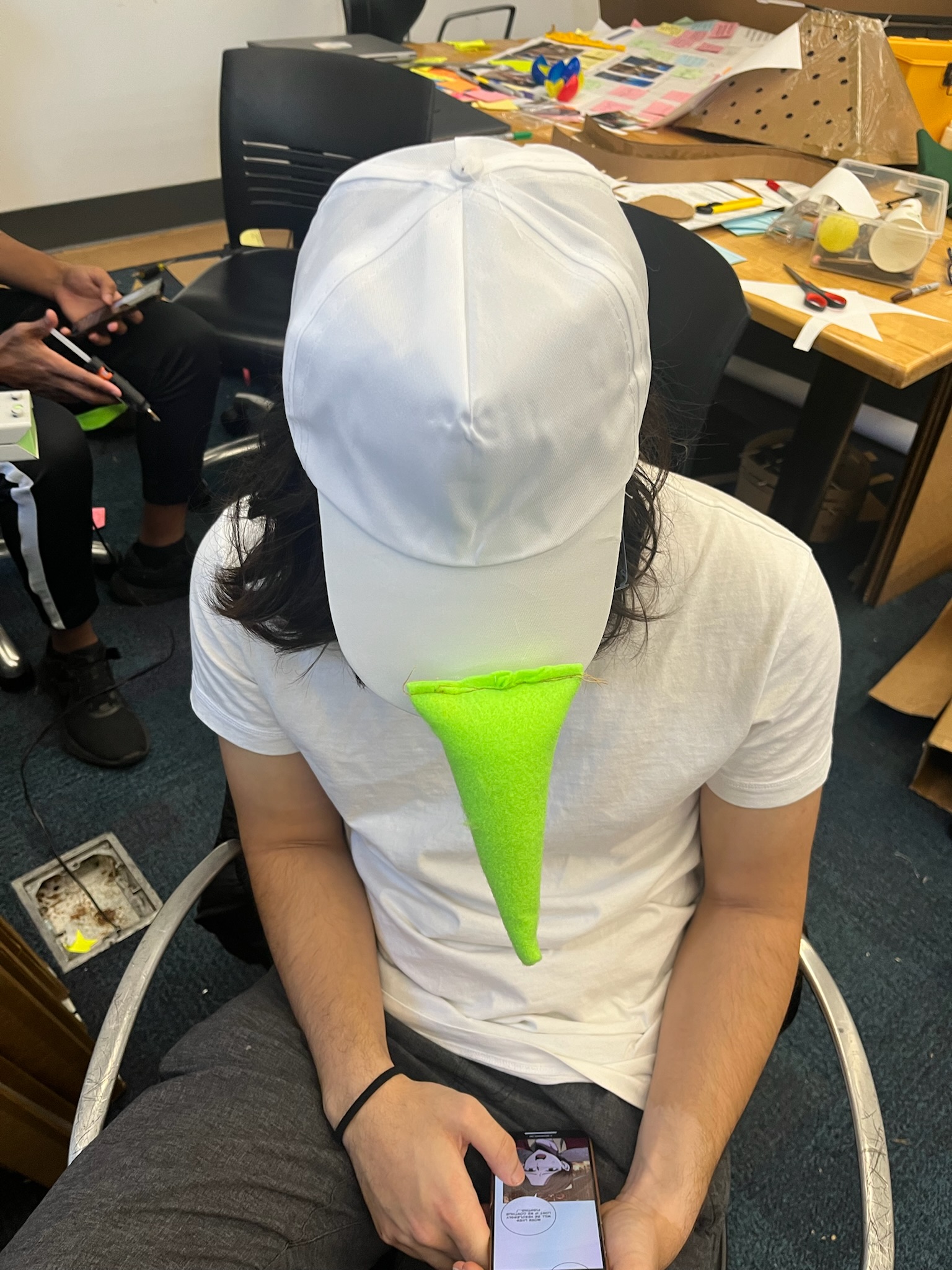
Getting there was messy. We burned through hundreds of sticky notes, sketches, and half-built ideas that didn’t work. Many concepts were either too complicated, not physical enough, or fell apart once kids actually interacted with them. The only way forward was building fast, testing early, and throwing things out without hesitation.
We had about a month to design, build, and install the final game. When fourth graders came to playtest, they immediately revealed gaps in our assumptions. They loved the competition, but also found unintended behaviors, like throwing eggs at each other, that forced us to rethink rules and physical constraints on the spot.
Outcome:
The final version of Chunky Chameleons worked. Fourth graders understood the game almost instantly, played collaboratively, and wanted to replay it. The mechanics encouraged balance, strategy, and friendly conflict, all without instructions or electronics.
More importantly, the project showed how physical prototyping is the design process. The strongest ideas didn’t come from planning, but from watching real players interact with imperfect builds and adjusting in response. Chunky Chameleons became a lesson in embracing uncertainty, iterating aggressively, and letting users shape the final experience.