%4010x.png)
Goal:
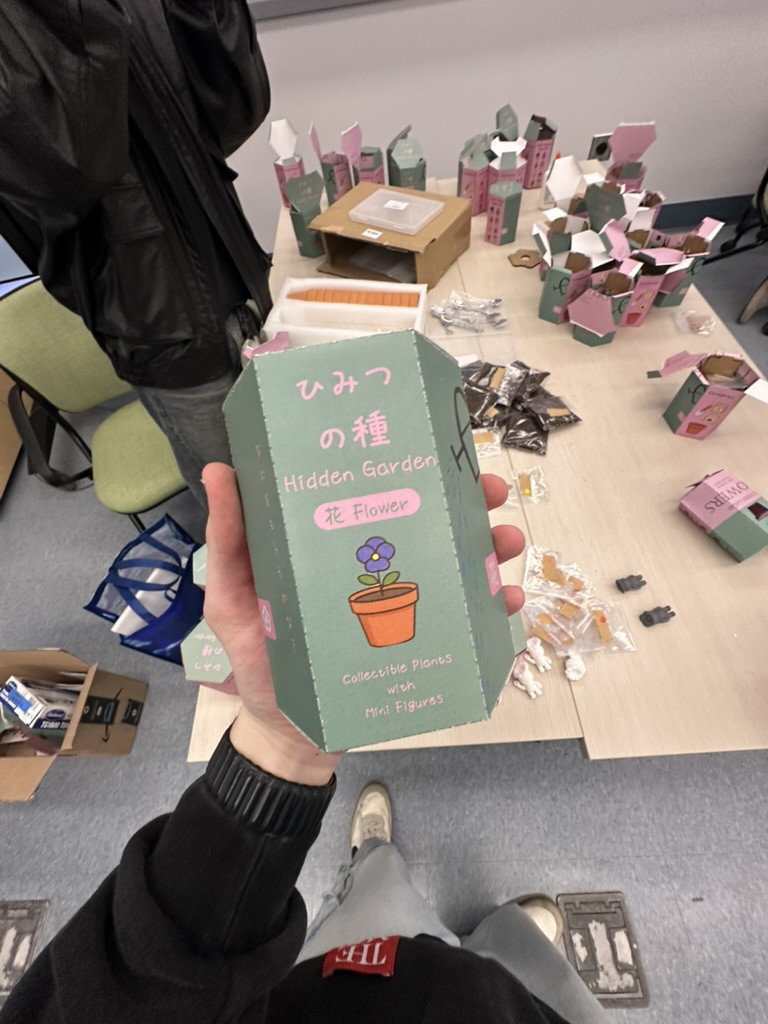
The goal of the Hidden Garden project was to design an approachable and engaging way for college students to connect with plants through a user centered, collectible “grow a garden” mystery kit. Working with a team of six, I helped develop the concept, run user research, and lead design iterations from early brainstorming to a tested, manufacturable product. Each kit included a small pot, soil, seeds, and a surprise character that grew alongside the plant.
.png)
Challenges:
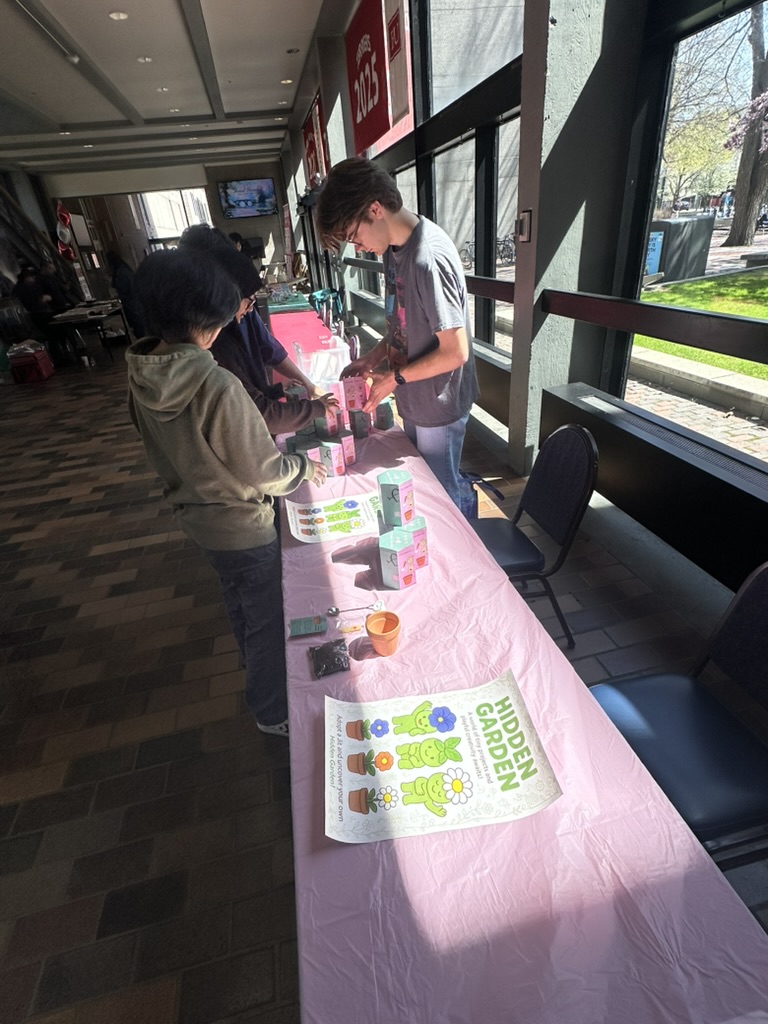
A main challenge was understanding what actually motivated students to buy. The mystery character consistently drew interest, but our interviews and pop up studies at BU and Wellesley revealed that pricing heavily influenced purchase decisions. After experimenting with price points, we learned that lowering the price from twelve dollars to eight increased engagement, but around five dollars was the ideal impulse buy range for our audience.
Another challenge was building a design that could be manufactured reliably at small scale. We produced about forty kits, each costing roughly three dollars and forty cents, which required refining packaging, strengthening box construction, matching figure artwork to the in box characters, and establishing a simple but repeatable assembly workflow. Alongside the physical prototyping, we created a Value Proposition Canvas and a Business Model Canvas to understand motivation, market fit, and long term scalability.

Outcome:
By the end of the semester, our team had created a fully tested product concept with clear opportunities for continued growth. We identified that timing, such as launching earlier in the semester, and improving online presence would be key for driving future engagement.
The Hidden Garden ultimately became an exploration of how design, research, and product strategy come together to shape experiences that feel playful, intentional, and feasible in the real world.